You're scaling campaigns. Your creatives are killer. Your targeting is tight.
And your dashboards are lying to you.
Meta shows one Return on Ad Spend (ROAS), Google Analytics shows another, and your Shopify backend tells a completely different, much sadder story.
This attribution bleed is the reality of eCommerce today. As browsers aggressively throttle tracking capabilities, relying on traditional pixel data means you are flying blind.
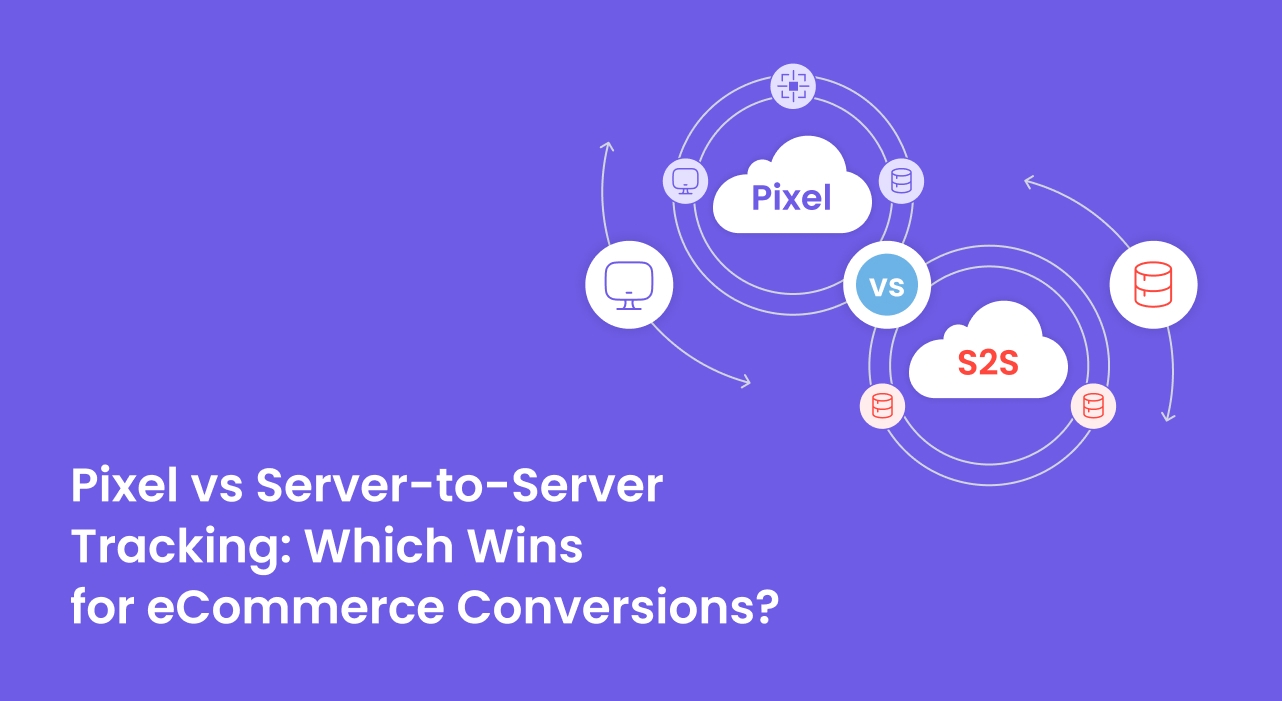
The question is no longer if you should upgrade to Server-to-Server (S2S) tracking, but how quickly you can implement it before your algorithms starve.
3 Reasons Traditional Pixels Are Bleeding Data
Media buyers relied on browser-based pixels to feed ad networks for over a decade, but client-side tracking is fundamentally broken today. Here is exactly what is killing your data:
1. Ad Blockers & Privacy Browsers
With a massive segment of internet users natively blocking trackers (especially with the rise of privacy-first browsers like Brave), you could be missing nearly half of your conversion data right out of the gate. When pixels can't fire, you're making budget decisions based on partial information.
2. ITP & The 7-Day Window
Apple's Intelligent Tracking Prevention (ITP) and similar protocols have gutted third-party cookies. Safari now restricts first-party cookies to a mere seven days. If your buying cycle takes longer than a week, that attribution is permanently lost.
3. Cross-Device Fragmentation
Today's buyers discover on a mobile app, research on a tablet, and convert on a desktop. Pixels routinely drop the baton during these handoffs, misattributing your top-of-funnel wins and making it impossible to map the true customer journey.
The S2S Shift: Direct Server APIs
Server-to-Server tracking (like Meta's Conversions API or TikTok's Events API) takes a completely different, much more resilient approach. Instead of relying on a fragile user browser to report a purchase, S2S sends information directly from your server to the ad platform's server.
Think of S2S tracking as a direct, encrypted phone line between your database and Ads Manager. Pixel tracking is like passing a physical note through a crowded room—it has to bypass extensions, ad blockers, and iOS privacy protocols before it reaches its destination, and it usually gets lost.
3 Infrastructure Advantages for Media Buyers
Upgrading to server-side tracking isn't just an IT compliance project; it's a direct performance multiplier. For advanced media buyers, this infrastructure unlocks three massive advantages:
- Many eCommerce brands report a 30-40% immediate bump in attributed conversions after switching. Because S2S operates independently of the browser, it is immune to client-side blockers. Performance didn't magically spike overnight—they just finally captured what they were already paying for.
- Modern black-box algorithms (like Advantage+ and Performance Max) live and die by data volume and Event Match Quality (EMQ). By feeding these platforms a stable, unblockable stream of first-party identifiers (like hashed emails and phone numbers), your campaigns exit the learning phase faster and optimize much more aggressively.
- By matching secure server-side signals instead of relying on fragile cookies, you'll finally have accurate cross-device mapping and a holistic view of your highest-LTV customers, allowing you to scale budgets with confidence.
Align Your Dashboards & Illuminate Your Campaigns
The era of easy pixel tracking is over. While transitioning to S2S will require a technical investment up front, the cost of doing nothing is severe campaign degradation and wasted ad spend.
Whoever has the cleanest, highest-volume data wins the auction. Make the upgrade to server-side tracking so you can stop flying blind and start scaling.





Related Posts: